Editor’s note: This story is an edition of Link Rot, a bi-weekly column by Shanti Escalante-De Mattei that explores the intersections of art, technology, and the internet.
The plan? To steal the number one spot on the Billboard music charts using the power of the internet. All it would take was convincing 100,000 people to be in a band together.
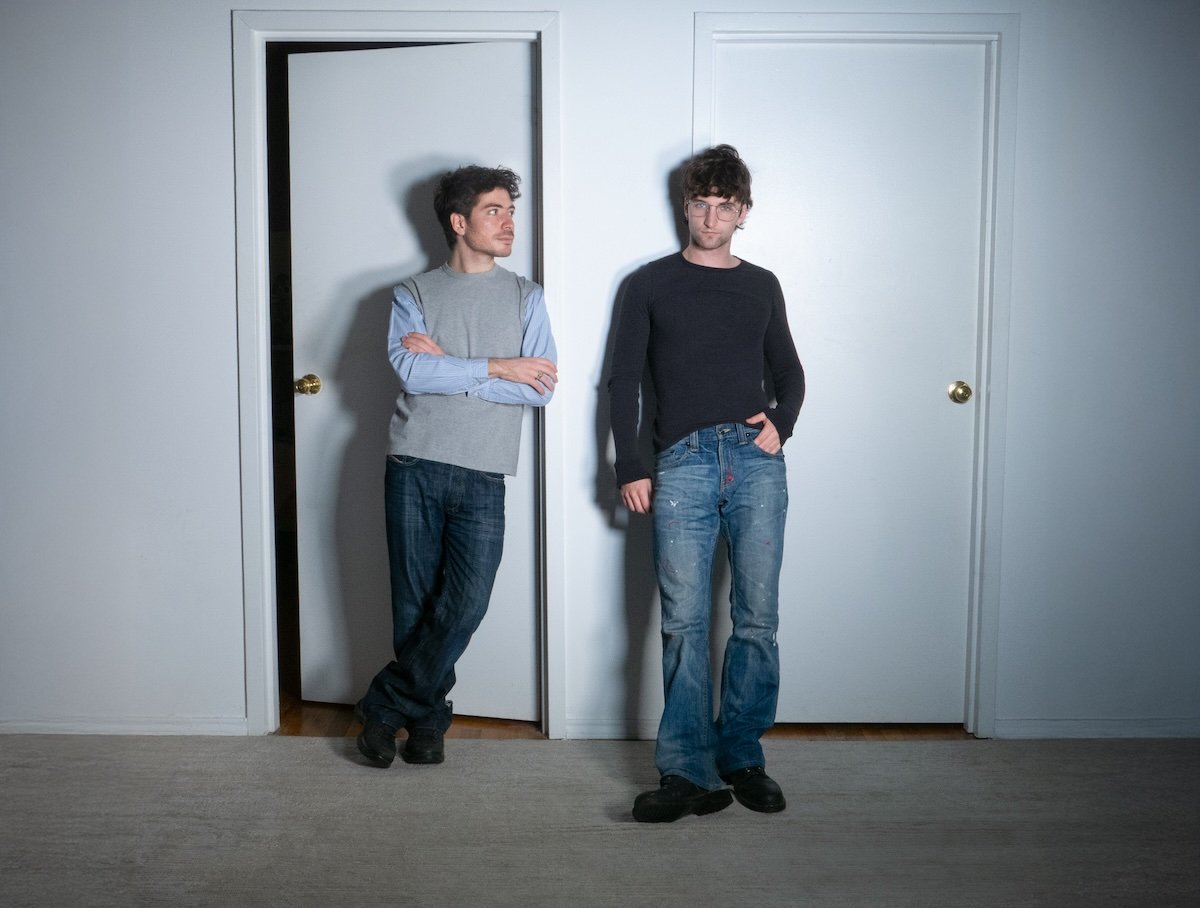
Dubbed Everybody’s Album, the work is the brainchild of Danny Cole. A painter, designer,and performance artist, Cole has gained notice as a kind of cultural disrupter. In 2021, at 21 years, he drew attention for covering the O in the Hollywood sign in Los Angeles with a giant cow. Two years later, he installed a sculpture, guerrilla-style, onto the balcony of a luxury residential building overlooking Manhattan’s High Line.
Everybody’s Album is similarly something of a guerrilla art piece. After researching how Billboard’s music charts work, Cole decided on a plan to hack the Billboard 200, which tracks the US’s most popular albums using blending album sales with streaming plays, as well as other metrics. He and his team created a website where users are introduced to their role in the larger project: In return for recording one second of audio, Everybody’s Album pays each user $7.99 in a Shopify gift card that can only be used to buy a pre-order of the album, also priced at $7.99. (Those interested in submitting full tracks could also do so by reaching out to the team directly.) If they could find 100,000 participants, they could exploit this apparent loophole to land on the charts.
“You can see Billboard as a cultural scoreboard—who won in creativity this week,” Cole told me recently. “But if you look at who’s won that scoreboard, every single time it’s always a product from the same few big corporations. Major labels use creative tactics to inflate sales and so these charts don’t really reflect true consumption patterns. So I thought, is there a way for common people to play that game?”
Cole reached out to Anthony Po, an influencer with over 900,000 followers on TikTok, just under 2 million on YouTube, and over 350,000 on Instagram. Po delights delights in drawing crowds to sometimes strange events. He was the architect behind the viral Timothy Chalamet look-alike contest last year, the Anthony meetup, and the coolest stick competition, to name a few. By leveraging Po’s following and constantly promoting the project through short-form videos, as well as recruiting other friends in media to participate, Cole and Po have gotten 80,000 people to record audio for the project. But is it ‘art’?
At least one participant at last week’s album release party thought so. “This is banana on the wall type shit,” they said, referencing Maurizio Cattelan’s Comedian.
When I suggested to Cole that his work were essentially stunts involving the coordination of attention and participation, he pushed back. “If you call it a ‘stunt’ it’s like – end of discussion,” he said. “This is just for capturing attention. But this is disruptive art. I want to make work that makes your eyes go wide, that takes you out of your daily patterns, I want to make that experience that takes us out of the cruel and mundane.”
It wouldn’t be an exaggeration to call Cole Keith Haring’s heir. Haring made his name on public art stunts that involved drawing on advertisement spaces in the NYC underground and making sure to bring along a photographer to capture not only the act of vandalism but his arrests. Today, Cole makes short form videos replacing advertisements around New York with prints featuring his “Creature” character. Both artists have used identifiable characters, the mythos of street art, and their willingness to produce merchandise to move beyond the production of artwork to the production of worlds.
Po, meanwhile, wasn’t sure about how to categorize the project or himself. Though Cole called him a performance artist, Po introduced himself to the crowd at the party by saying, “I do crazy stunts.” In our conversation later in the night, Po associated art with gatekeeping and pretension. But like Cole he is motivated by the production of wonder.
“I miss the internet I grew up on,” Po said. “Doing things just to do them. Now that there’s so much money to make online we’ve lost the plot. I want the old internet back, it was fun, and beautiful, and people did it all for free.”
Cole and Po have definitely been effective in creating a sense of participation in something epic. Billboard has attempted to shut down the project, citing the issue that it is potentially a “crowdfunding initiative.” To get on Billboard’s charts an intermediary called a reporter must verify sales. According to Cole, Billboard reached out to Everybody’s Album’s reporter to say that rules had been broken and the reporter could not submit the sales numbers. But Cole argues that there is no rule concerning crowdfunding in Billboard’s guidelines.
The other issue Billboard has allegedly cited is that Cole is “giving the album away.” Cole has designed a loophole for that by making participant payout possible. In a rather Nathan Fielder-esque scheme, any user can collect their single penny from Cole if they meet him on a mountain top in Nunavut, Canada. To prove his point, Cole hiked the mountain recently with an employee, and handed him a penny at the summit. Everything was filmed, of course, for a video called “Billboard versus the people.” (Billboard has not yet responded to the Everybody’s Album team’s requests for clarification on which rules they have broken, nor have they responded to ARTnews’s request for comment.)
Whether or not Cole and Po will get their sales recorded by Billboard remains to be seen. But what’s clear to me is that they are pushing the boundaries of art. Can the generation of crowds and the hacking of markets through the creative act of composing cooperation be considered an internet-native form of art or even some kind of post-art genre? I think so. Do you?

0 reacties